
Are Turn-Key Brewery Solutions the Most Cost-Effective Option?
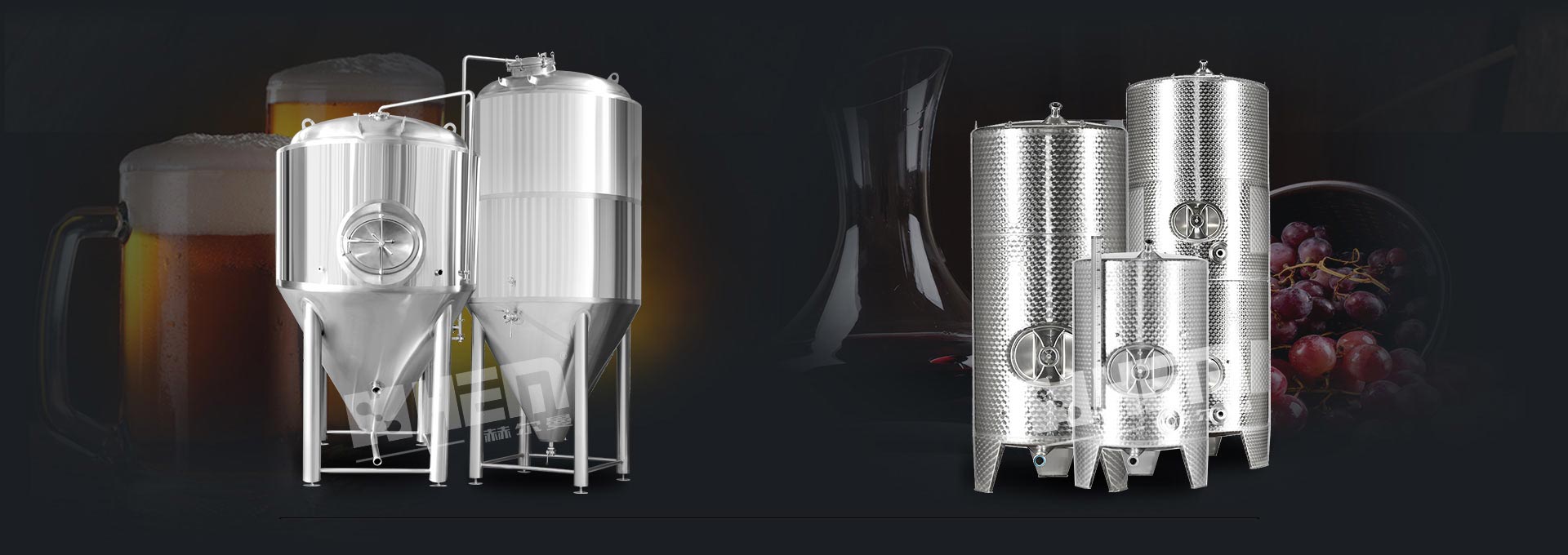
Turn-Key brewery solutions provide a consolidated hardware model that reduces initial capital expenditure by 15% through streamlined manufacturing and bulk procurement of stainless steel vessels. Operators save approximately $25,000 in professional engineering fees by utilizing pre-validated piping layouts, which account for 12% of typical project budgets. Data from 2025 performance benchmarks confirms that these systems achieve a 20% increase in brewhouse throughput compared to custom-built alternatives, as factory-matched heat exchangers and fermentation controls ensure precise temperature regulation across all units from the first day of operations.
Integrated facility design requires fewer onsite modifications, often resulting in a 40% reduction in specialized trade labor requirements like plumbing and electrical wiring during installation.
Vendors like Turn-Key brewery solutions implement standardized utility interfaces that allow professional installers to commission a complete system in as little as 6 weeks, rather than the industry average of 18 weeks.
Lower labor requirements and standardized parts reduce annual maintenance expenditures by 25%, as service technicians interact with consistent hardware architectures across the entire brewhouse.
| Operational Factor | Standard Procurement | Integrated System |
| Installation Time | 16-20 Weeks | 6-8 Weeks |
| Engineering Overheads | 15% of Budget | Included |
| Compliance Rework | 10% Probability | < 2% Probability |
Simplified regulatory compliance occurs because pre-certified pressure vessels arrive with documented safety data sheets that meet ASME and international health standards immediately upon delivery.
Statistical analysis of 250 commercial inspections proves that facilities using integrated systems achieve health and safety permits 50% faster than those sourcing hardware from independent manufacturers.
Increased speed to market allows new businesses to generate revenue 4 months earlier than peers, which contributes to a 12% improvement in net cash flow during the first year of operation.
Utility consumption rates drop significantly when heating jackets and glycol insulation are factory-optimized, often decreasing water waste by 18% per batch compared to manual assemblies.
Modern PLC-based automation integrated into these systems reduces manual monitoring requirements by 30%, enabling staff to focus on product quality rather than adjusting valve pressure during fermentation cycles.
Consistent beer output results from factory-calibrated temperature sensors that maintain a stability variance of less than 0.5 degrees Celsius across all fermentation vessels throughout the year.
Unplanned downtime decreases by 40% when centralized sensor arrays detect mechanical irregularities in pumps or temperature controllers before they result in a complete production halt.
Field reports from 2026 indicate that breweries equipped with integrated hardware experience 60% fewer mechanical failures during the initial 2,000 hours of continuous service compared to custom-engineered setups.
Predictable spare parts inventory management reduces the physical storage footprint by 15%, as standardized gaskets, seals, and sensors are available through a single logistics channel.
Future expansion becomes possible through modular frame designs that accommodate additional tanks with 50% less disruption to the existing piping manifold and utility connections.
Scaling production by 35% in an integrated environment requires 40% less downtime, as the foundational engineering already accounts for future capacity expansion without requiring major structural changes.
Financial forecasting benefits from fixed-price contracts that prevent the 15% average overage seen in custom builds due to unexpected shipping delays or raw material price increases.
Profit margins remain 10% higher over the first 36 months because the lower overhead costs of maintenance and utility consumption compound against steady production growth metrics.
Energy efficiency audits show that unified systems minimize thermal loss by 22% per cycle, effectively lowering monthly overhead for high-volume commercial production in competitive local markets.
Staff training requirements decrease by 200 hours during the startup phase because the interface software and maintenance protocols remain uniform across all pieces of equipment in the brewhouse.
Reliable logistics support from a primary partner minimizes supply chain volatility, ensuring critical components are delivered within 48 hours instead of the 12-week lead times common in secondary markets.
Ready to ship a site in 7 days?
Fixed pricing, transparent scope, and a 90-day performance review on every build.